
Nvidia's CEO Contest Goes Public: Huang's Allies Seek His Return as Treasury Secretary Calls for an Outside Successor
Days after Jensen Huang resigned as Nvidia's CEO, his allies are lobbying the board to reinstate him, while Treasury Secretary Scott Bessent has publicly called for an outside successor and asked for answers on chip export controls within 10 days.
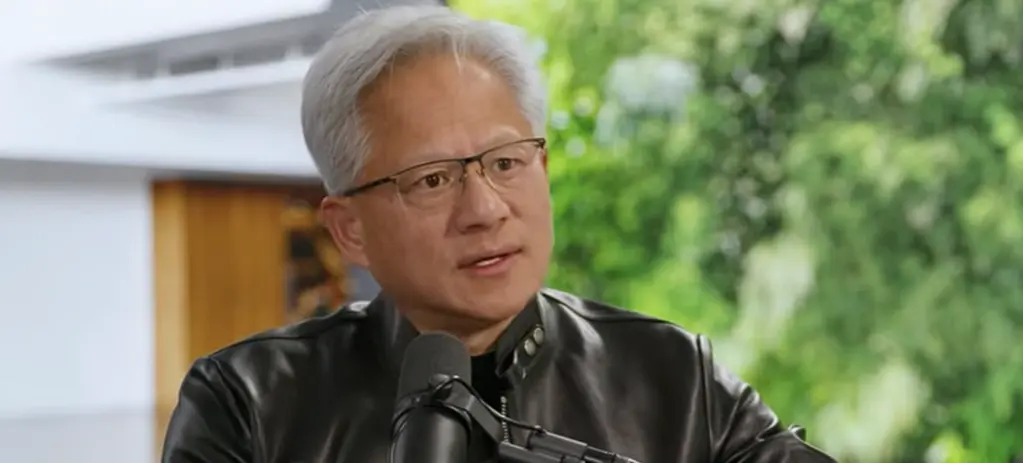
Jensen Huang resigned as Nvidia's CEO on November 12. Within days, the disagreement over his successor became public: his allies in Silicon Valley are pushing for his reinstatement, while Treasury Secretary Scott Bessent has called on the board to look outside the company. The board's independent investigation is ongoing, and quarterly results are due Tuesday.
Allies lobby the board
The Financial Times reported on November 15, citing several people familiar with the matter, that Huang has discussed returning as CEO with people close to him and supports the lobbying effort. One ally said that everyone who matters in tech outside the frontier labs supports Huang, and that they are assembling a "war room" of Silicon Valley executives and will seek White House backing.
Meanwhile, an open letter asking the board to bring Huang back has spread quickly. According to Moneywise, it had passed 100,000 signatures by Saturday morning, including 5,248 signers who identified as current Nvidia employees and 53,233 who identified as shareholders. Signers include Elon Musk, Epic Games CEO Tim Sweeney, Y Combinator CEO Garry Tan and Replit CEO Amjad Masad.
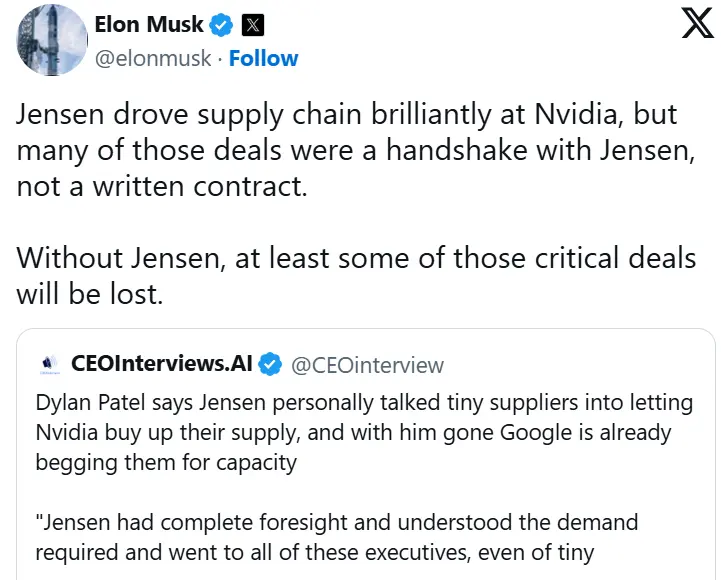
Musk wrote on X: "Jensen drove supply chain brilliantly at Nvidia, but many of those deals were a handshake with Jensen, not a written contract. Without Jensen, at least some of those critical deals will be lost."
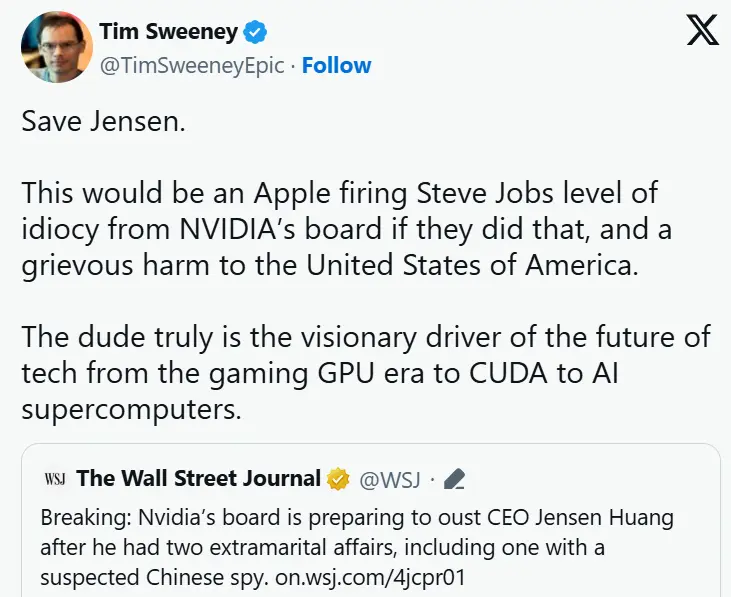
On November 12, the day Huang resigned, Sweeney wrote that it "would be an Apple firing Steve Jobs level of idiocy from NVIDIA's board if they did that, and a grievous harm to the United States of America."
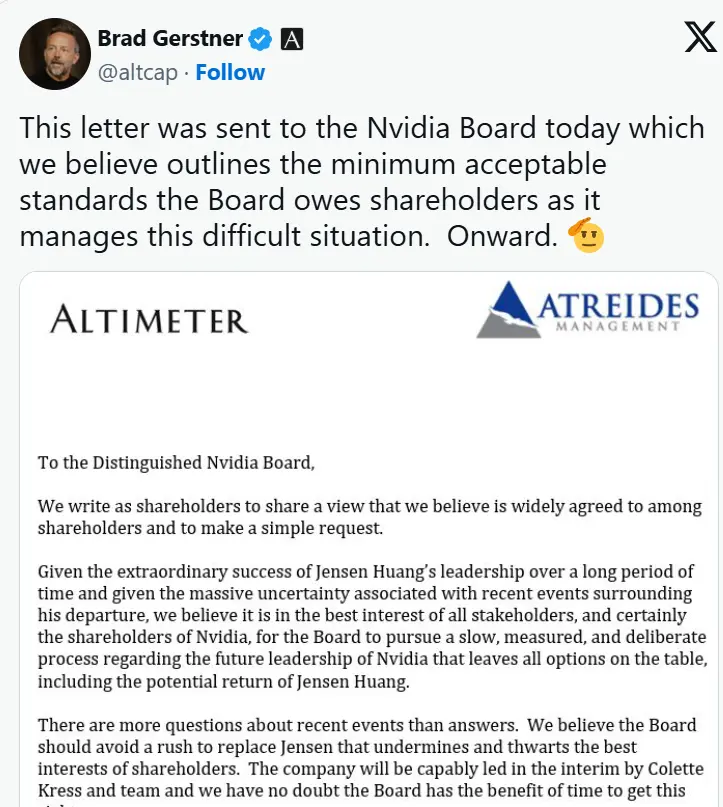
Two Nvidia shareholders, Altimeter Capital founder Brad Gerstner and Atreides Management's Gavin Baker, sent a joint letter to the board on Friday asking it to "pursue a slow, measured, and deliberate process regarding the future leadership of Nvidia that leaves all options on the table, including the potential return of Jensen Huang." According to CNBC, the two funds held about $2.13 billion of Nvidia stock combined as of June 30.
Bessent calls for an outsider and answers within 10 days
Washington has taken the opposite position. Speaking on Fox News' Sunday Morning Futures, Treasury Secretary Bessent said the board should look outside the company for new leadership and that a sweeping change is needed.
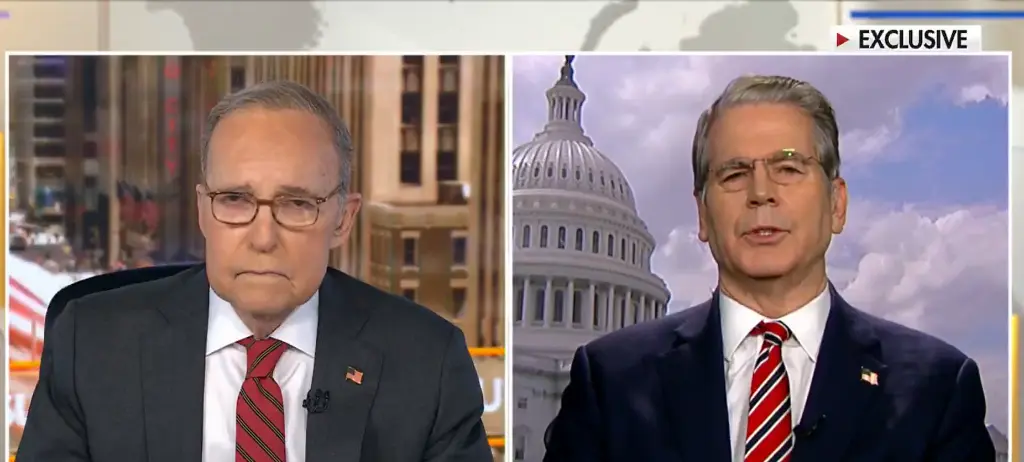
His concerns extend beyond personnel. He questioned whether Nvidia knowingly violated export controls on advanced chips, asking what Nvidia's corporate culture is and whether the company pushed seemingly illicit sales to lift revenue and profit. He said answers are needed from the board and outside counsel within 10 days.
He also noted that after direct sales abroad declined and Singapore billings surged, Nvidia stopped reporting Singapore revenue separately in its filings. Citing reports that only 1% of those chips actually stayed in Singapore, he compared the situation to banking, saying federal regulators would long ago have forced out the executives of a bank with a comparable compliance failure.
Bessent said the central question for the investigation is at what level export controls failed, whether at the junior, middle or executive level, and who knew. He described the Singapore shell companies involved as obvious and said they were already under investigation. Asked how Singapore-based Megaspeed moved high-end Nvidia chips, he deferred to the Commerce Department. Megaspeed's former managing director, Alice Huang, has reportedly been in a relationship with Huang and is under scrutiny.
Obstacles to a return
Supporters of his reinstatement acknowledge the obstacles. One person involved in the effort told reporters that an affair with a subordinate is a fireable offense.
Unlike many founder CEOs, Huang has never held a controlling stake in Nvidia and cannot override the board. Interim CEO Colette Kress is running the company and working to stabilize it before Tuesday's results.
Huang also faces congressional scrutiny. Rep. John Moolenaar, chairman of the House Select Committee on the CCP, said on Sunday that Huang has agreed to closed-door interviews with three House committees.
On succession, Nvidia's board has approached Arm CEO Rene Haas as a potential successor but says it has not begun a "formal" process. Investor David Friedberg argued that if the investigation finds Huang did not break the law, shareholders could choose to overlook code-of-conduct violations or failures to disclose to the board and allow him to return.
Compliance questions remain unresolved
The episode has become more than a leadership crisis. Huang's relationship with Alice Huang has drawn scrutiny to Nvidia's compliance controls on AI chip sales to customers in Asia.
There is no official finding so far. CIA officials are reportedly not yet convinced about Alice Huang's situation, and Attorney General Todd Blanche said neither the Justice Department nor the FBI has reached a conclusion. Asked about Senate legislation to codify President Trump's executive order restricting advanced chip exports, Bessent said the existing rules are sufficient and need to be enforced.
Our view
From a security and governance perspective, the episode highlights two issues.
Key-person risk. According to Musk, some of Nvidia's supply chain deals rest on handshake agreements with Huang personally rather than written contracts. If so, key commitments depend on one individual, and after a leadership change neither partners nor the board can readily confirm which commitments remain in force.
Export control compliance depends on process. Bessent's questions focus on which level failed and who knew. Together with the end of separate Singapore revenue reporting and reports that only 1% of chips remained there, they point to end-user verification and internal audit. AI compute is now regulated as a strategic resource, and the quality of chipmakers' customer due diligence and disclosure will shape how regulators respond, regardless of who becomes CEO.
Upcoming milestones include Tuesday's quarterly results, the 10-day deadline set by Bessent, the House interviews and the conclusions of the board's independent investigation.
We will continue to track Nvidia's leadership change and chip export controls in our daily news.
Adapted from a November 15, 2026 report by Wallstreetcn (Long Yue), which cites the Financial Times, Fox News, Moneywise and CNBC. Direct quotes from Musk, Sweeney and the Gerstner–Baker letter are taken from their original English posts; other statements are paraphrased from the Chinese-language report. Claims about Huang's relationship with Alice Huang and chips routed through Singapore come from media reports, and investigations have not concluded. All images are from the original Wallstreetcn article. This is not investment advice.