
Brief: Anthropic's IPO Roadshow in 17 Slides
Anthropic plans to list on Nasdaq as ANT, pricing on November 18. We picked 17 of the 57 roadshow slides and grouped them by theme: how much it makes, who pays, why margins are so high, and where security fits in.

Anthropic's IPO roadshow is a 42-minute video with 57 slides. Rather than walk through it speaker by speaker, we picked the 17 slides that matter most and grouped them by theme. All figures come from the roadshow materials; we have not checked them line by line against the prospectus.
The roadshow holds much more than a brief can fit. Anthropic has signed about $900B of compute contracts running through 2045. On a GAAP basis, its Q3 operating margin was actually -3%. And an independent trust picks a majority of the board, so public shareholders won't control it. The full version walks through all 42 minutes, with 38 slides.
- Quarterly revenue went from $376M in Q1 2025 to nearly $17B in Q3 2026. October's annualized run rate was about $81B.
- Margins are high because each dollar of compute now earns more: revenue per compute dollar rose 4.3x over six quarters.
- The customers are enterprises, and they keep expanding: more than 11,900 spend over $100K a year, and net revenue retention is about 900%.
- Claude writes over 90% of the company's code, and R&D is turning into a loop of models improving models.
- Cybersecurity is now its own business line. Mozilla fixed 271 bugs in a single release using Mythos Preview.
The offering
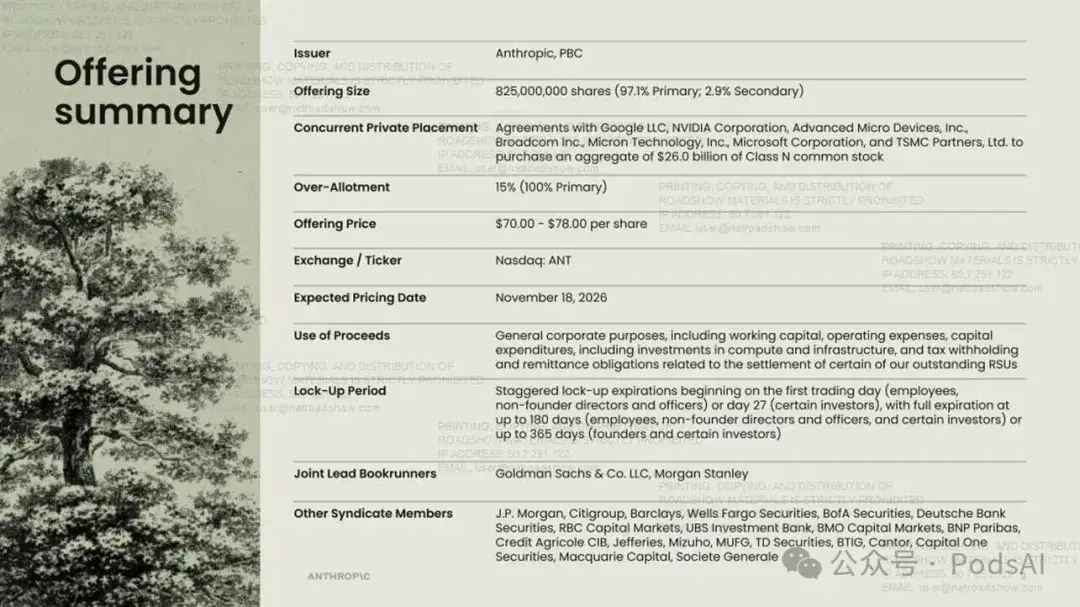
- 825 million shares, about 97% primary, priced at $70–78 per share, with pricing expected November 18.
- Listing on Nasdaq as ANT. Goldman Sachs and Morgan Stanley are joint lead bookrunners.
- A concurrent $26 billion private placement from Google, NVIDIA, AMD, Broadcom, Micron, Microsoft and TSMC, which covers almost the entire AI compute supply chain.
How fast it is growing
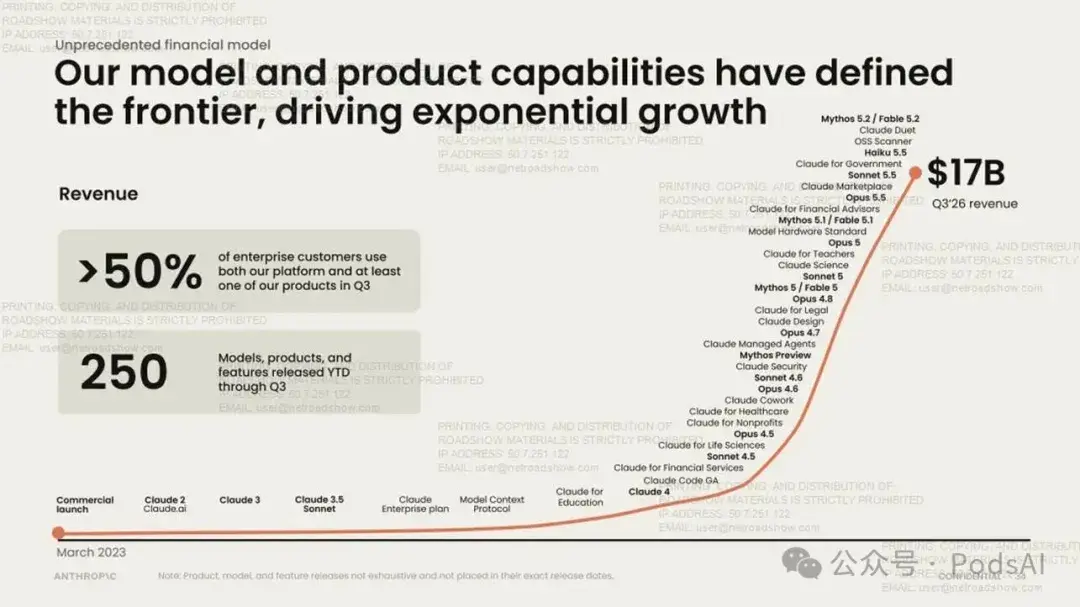
This slide lays every launch over the revenue curve to make one point: revenue follows model capability. The curve steepens sharply after Claude 4, reaching $17B in Q3 2026. The company shipped 250 models, products and features in the first nine months of 2026.
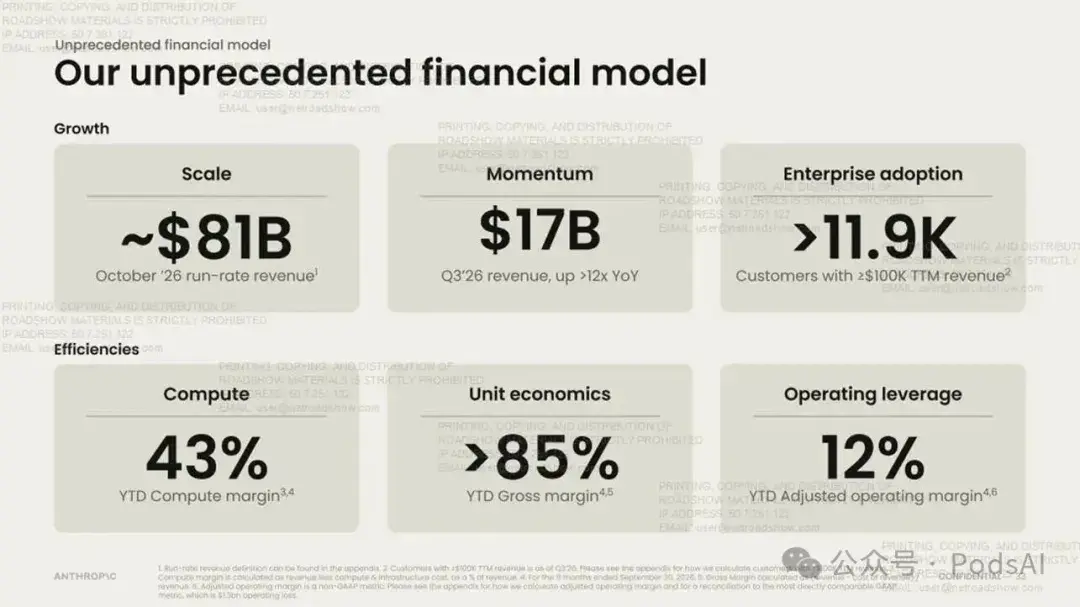
Beyond scale, the efficiency numbers stand out: year to date, a 43% compute margin, 85%+ gross margin, 12% adjusted operating margin and positive free cash flow. It is rare for an AI company growing 12x to already be profitable on this basis.
Where the margin comes from: compute efficiency
Compute is an AI company's biggest cost. Anthropic argues that its compute dollars go further than anyone else's, for two reasons.
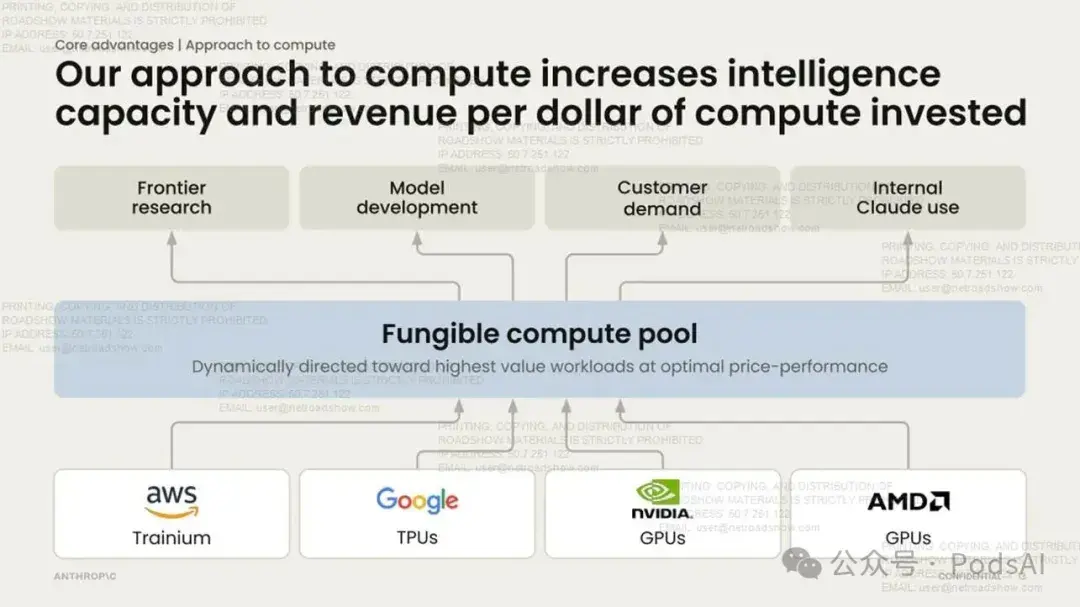
It runs on any chip. Claude trains and serves on Amazon Trainium, Google TPUs, NVIDIA GPUs and AMD GPUs, all scheduled as one pool, so the company can buy whatever offers the best price-performance. This year it brought up AMD GPUs for the first time. It handed the job to Mythos, which had it working in three days with Claude writing nearly all the kernels, a job that used to take dozens of engineers several months. Anthropic has also begun leasing chips and running them in purpose-built data centers, which it calls Anthropic Direct.
Compute multipliers. Improvements in training and inference let the same physical compute produce a stronger model. A 4x multiplier means a model that once took 100 units of compute now takes 25.
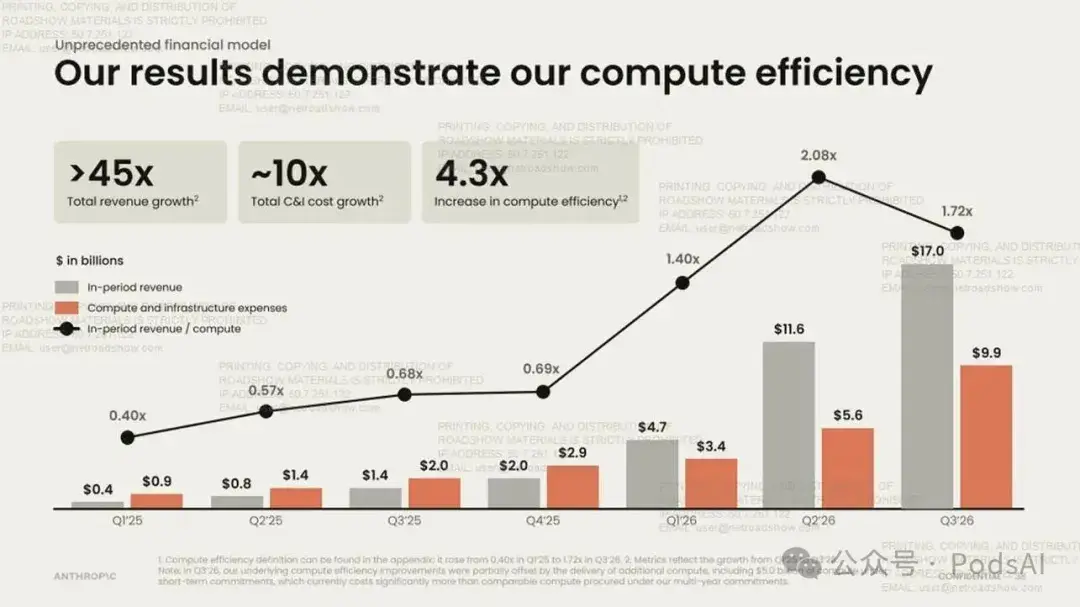
The result: over six quarters, revenue grew more than 45x while compute cost grew about 10x. Revenue per compute dollar rose from $0.40 to $1.72.
Who pays: enterprises
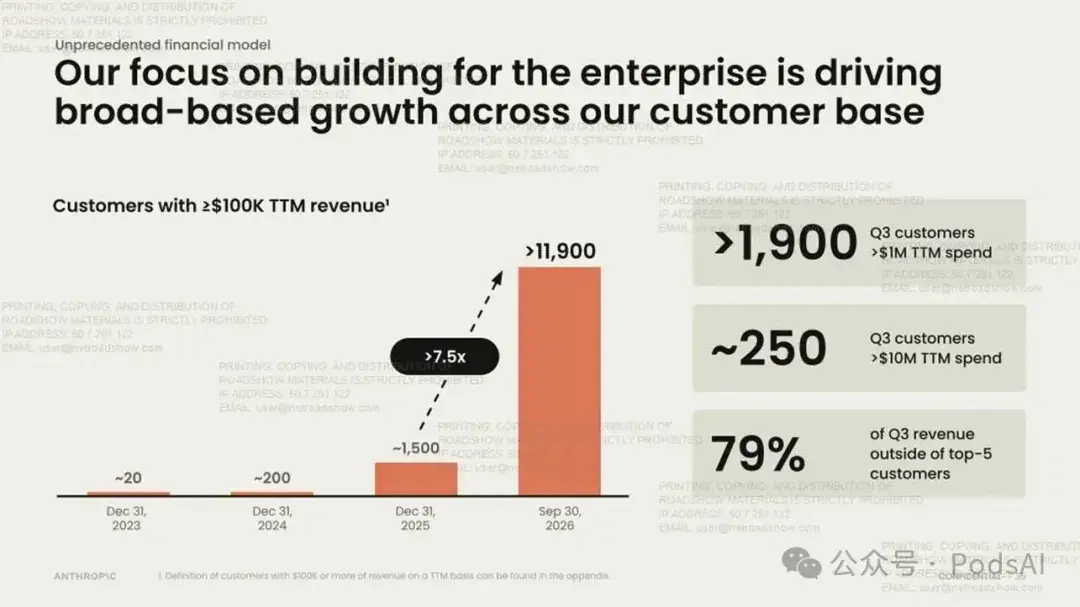
Customers spending over $100K a year went from about 20 at the end of 2023 to about 1,500 at the end of 2025 and more than 11,900 by September 30, 2026. About 1,900 spend over $1M and about 250 spend over $10M. 79% of Q3 revenue came from outside the top five customers, so the business does not hinge on a handful of accounts.
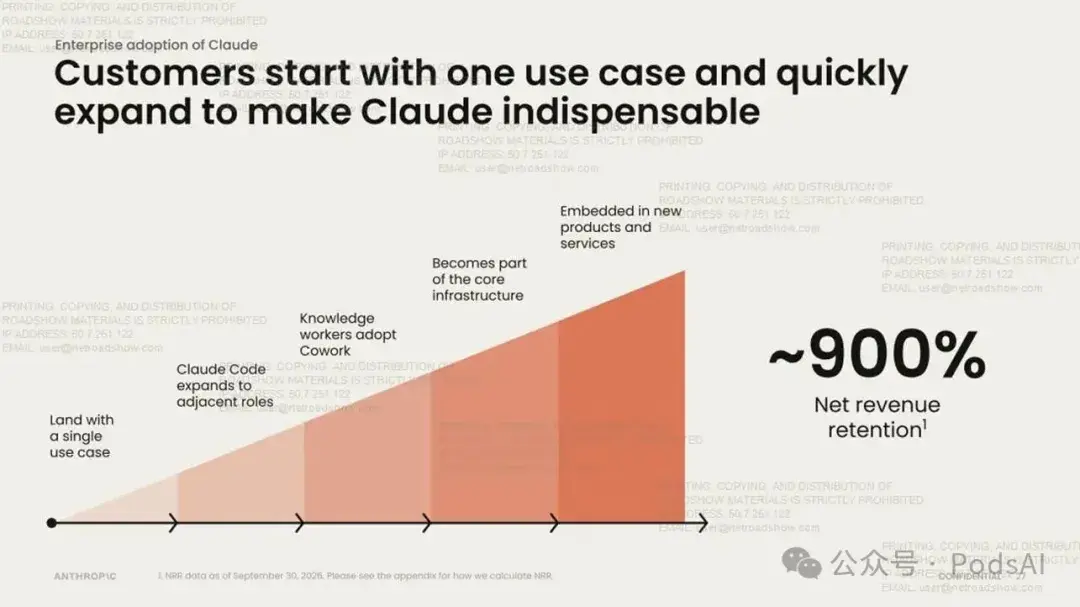
Net revenue retention of about 900% means existing customers spend roughly nine times as much a year later. The typical path: developers start with Claude Code, then knowledge workers in other roles pick it up, then teams automate business processes, and finally the company builds Claude into its own products.
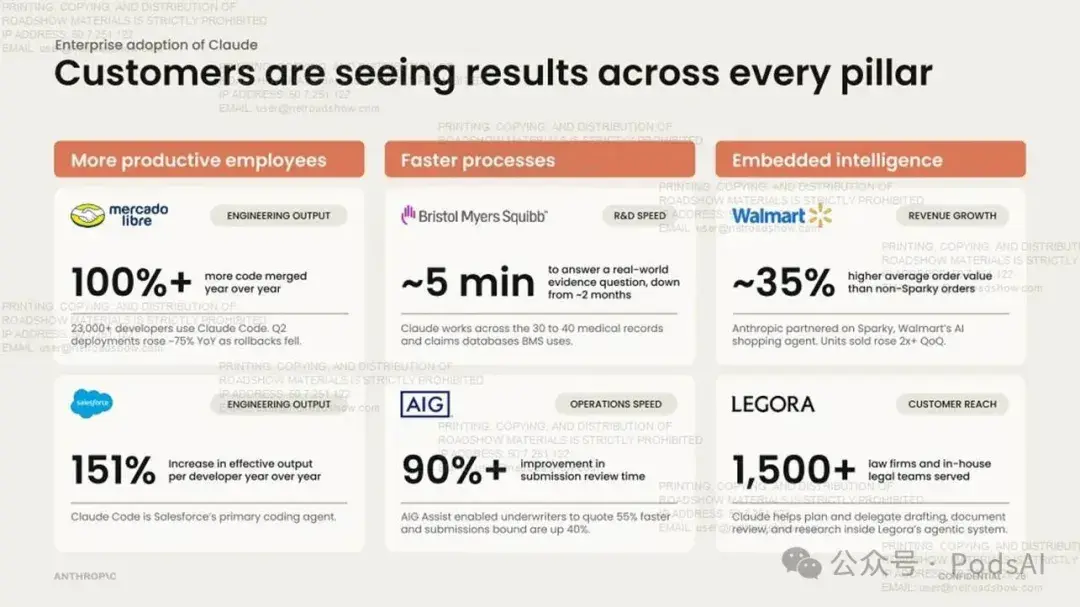
The customer results Anthropic highlighted:
- Mercado Libre: 23,000+ developers use Claude Code, and merged code more than doubled year over year.
- Salesforce: effective output per developer up 151% year over year.
- Bristol Myers Squibb: a research evidence question that took about two months now takes about five minutes. All 30,000 employees have access.
- AIG: underwriters quote 55% faster, and submission review time improved by more than 90%.
- Walmart: orders through Sparky, its AI shopping agent built with Anthropic, have about 35% higher average order value.
- Legora: serves more than 1,500 law firms and in-house legal teams.
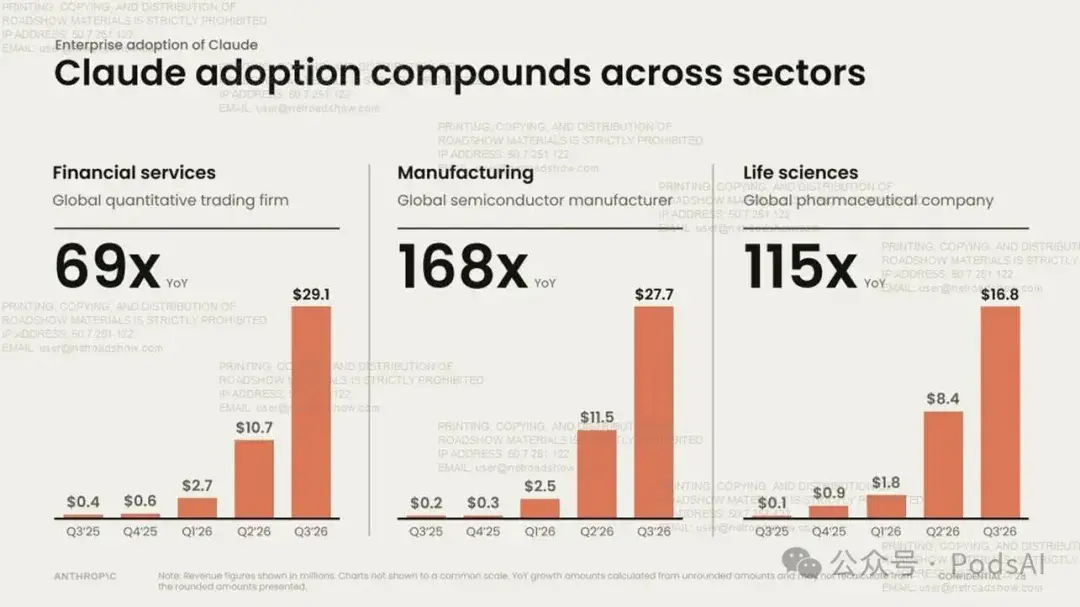
Penetration is still early. More than half the Fortune 500 spends over $100K a year with Anthropic, but those companies spend on average less than 0.1% of their total expenses on Claude.
Products: stronger models, lower prices
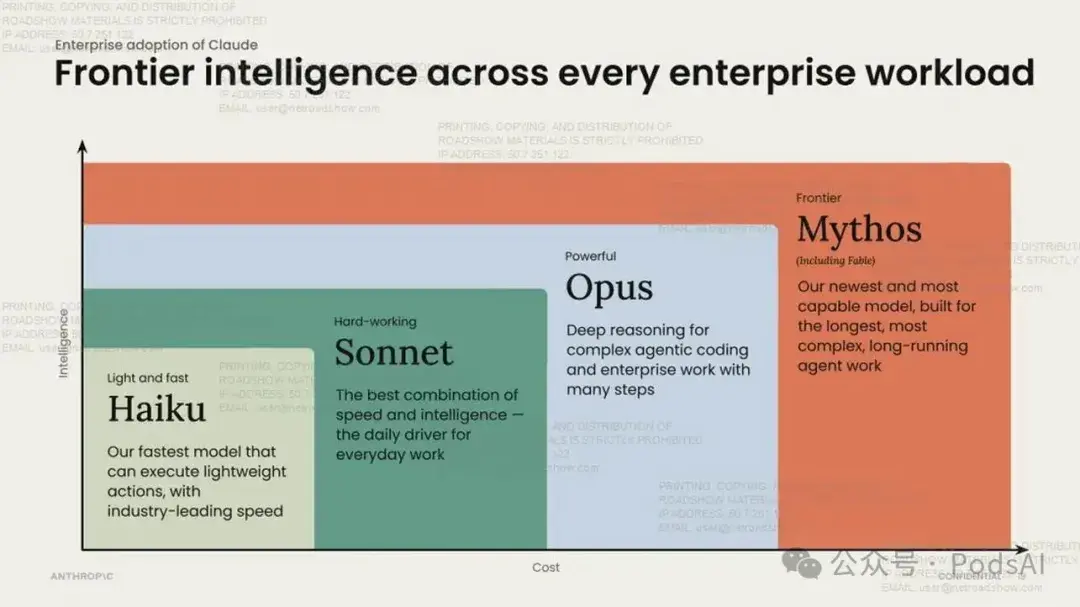
The lineup has four tiers: Haiku is fast and cheap, Sonnet is the everyday workhorse, Opus handles complex reasoning and long-running agent work, and Mythos sits at the top, currently deployed only to specific customers such as cyber defenders.
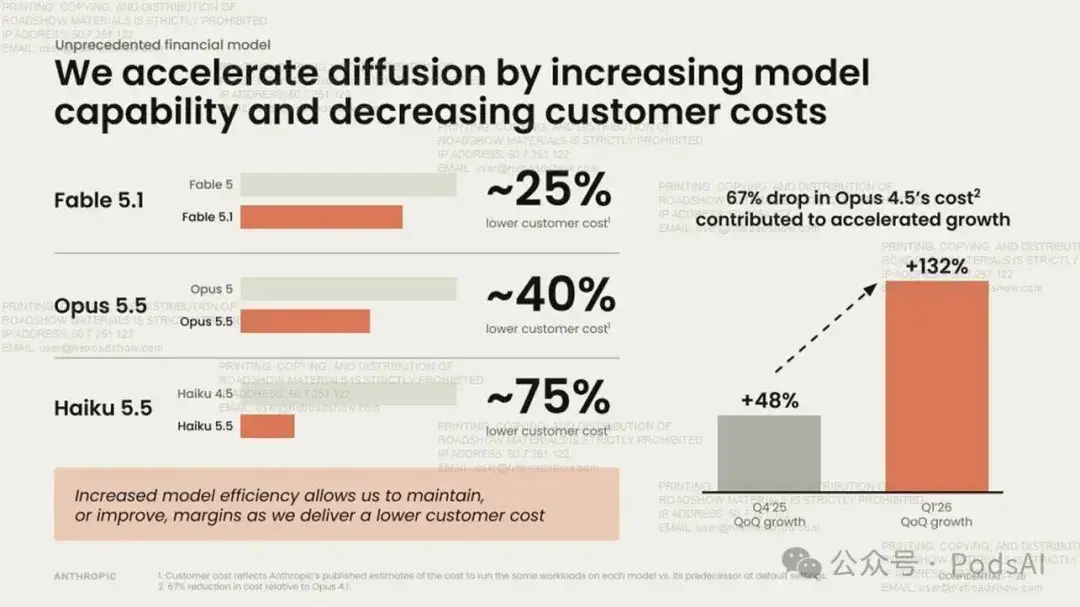
The newest models are cheaper: Fable 5.1 is down 25%, Opus 5.5 down 40% and Haiku 5.5 down 75%. The CFO said the Opus 5.5 cut was margin-neutral because the model is much cheaper to serve, and that in their experience lower prices quickly turn into more usage.
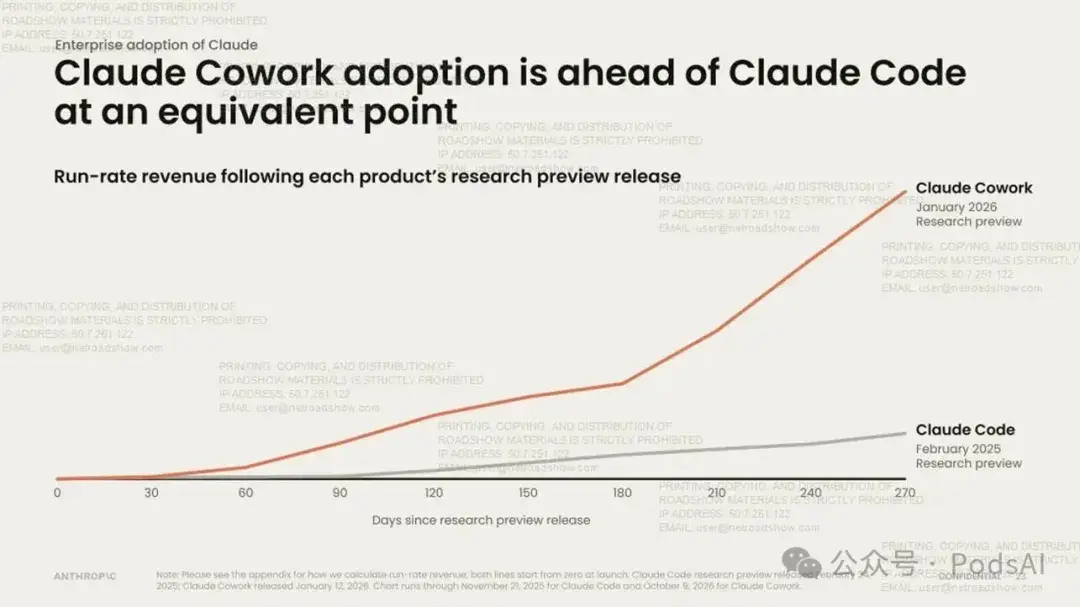
The newest product signal is Claude Cowork, which is growing faster after its research preview than Claude Code did over the same period.
Security: from cost center to selling point
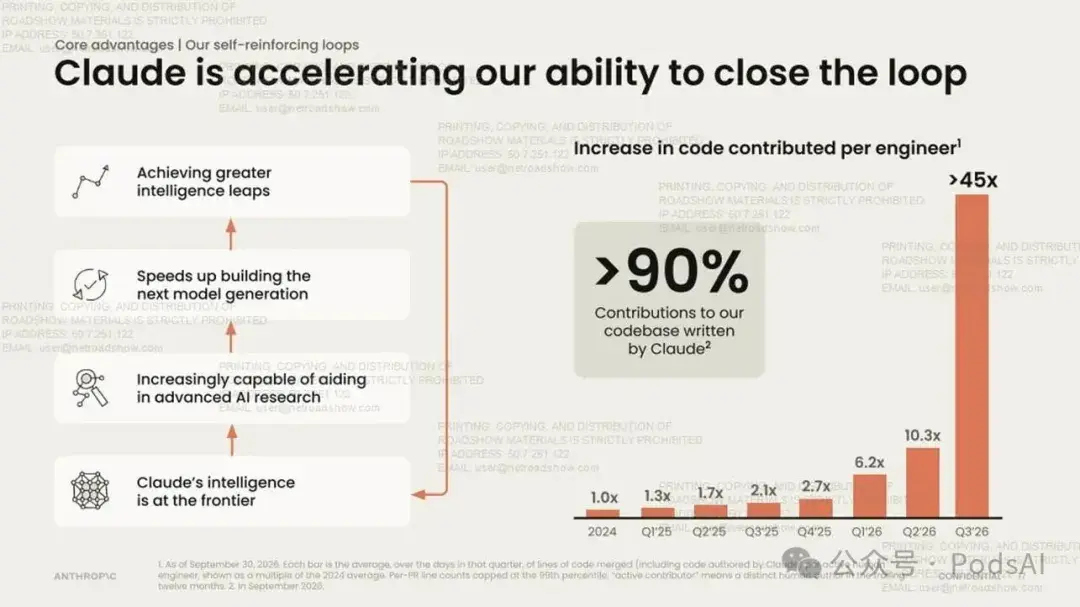
Claude writes more than 90% of Anthropic's code, and code contributed per engineer is more than 45x the 2024 level. Anthropic calls this "closing the loop," using models to build the next generation of models, and said plainly that it sees itself approaching recursive self-improvement.
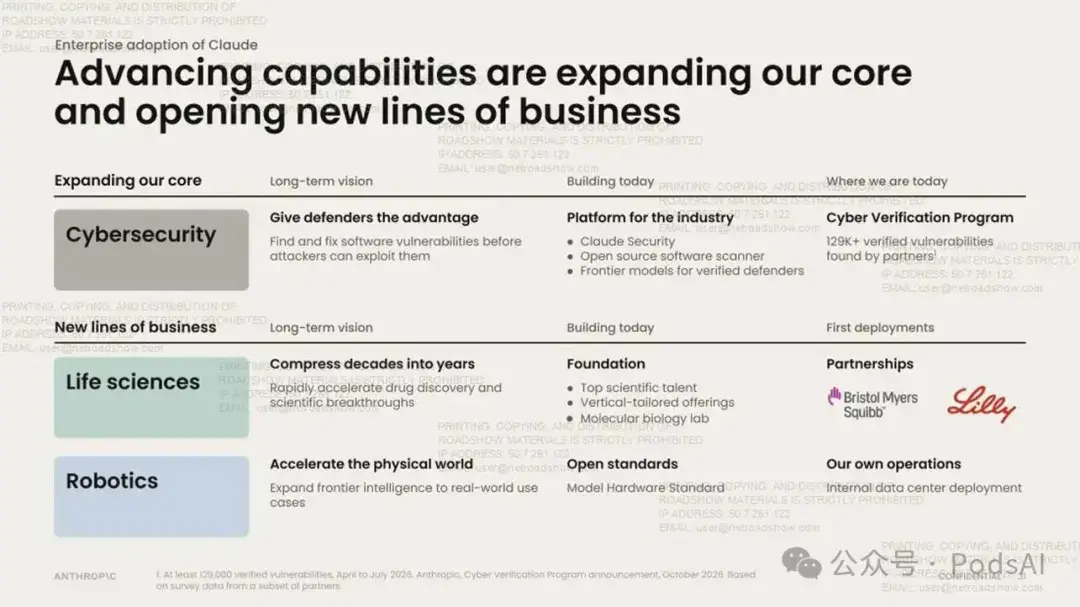
Cybersecurity is now a separate business line:
- Mozilla used to fix 20-odd security bugs per release. With Mythos Preview, it found and fixed 271 in one release.
- Partners in the Cyber Verification Program have found more than 129,000 verified vulnerabilities.
- Accenture plugged Claude into its own security platform and cut scans that took days to under an hour.
When BMS and AIG explained why they chose Anthropic, they talked about observability, permission controls and human oversight. Here, security is not a cost. It is a reason enterprises buy.
Looking ahead: margin targets and the balance sheet
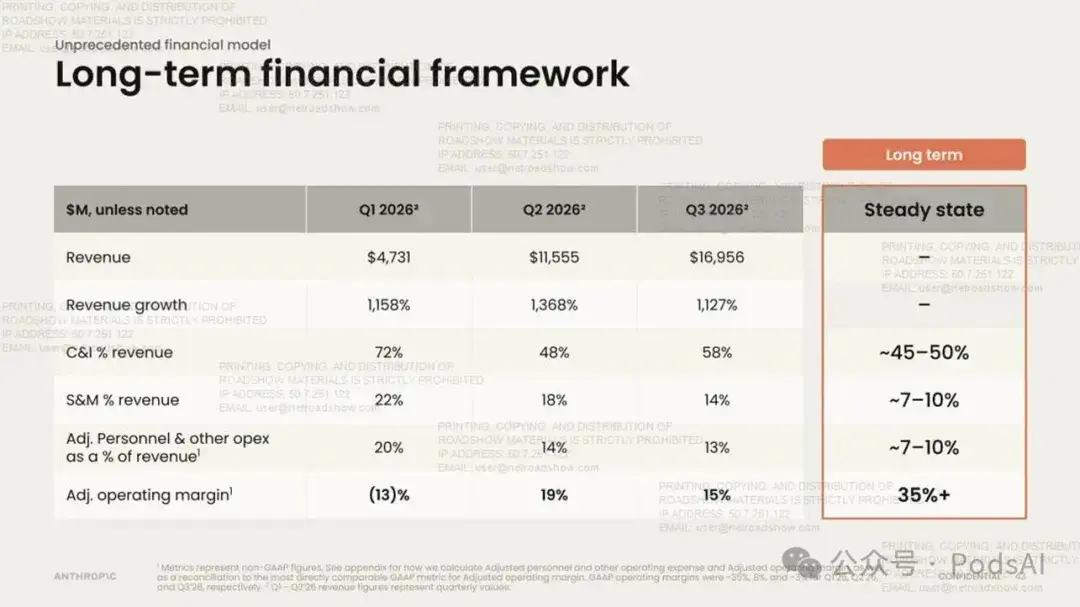
The long-term target is an adjusted operating margin above 35%, with compute and infrastructure at 45–50% of revenue, sales and marketing at 7–10%, and people and other costs at 7–10%. In Q3, compute was 58% of revenue and the operating margin was 15%, so most of the gap has to close through further compute efficiency.
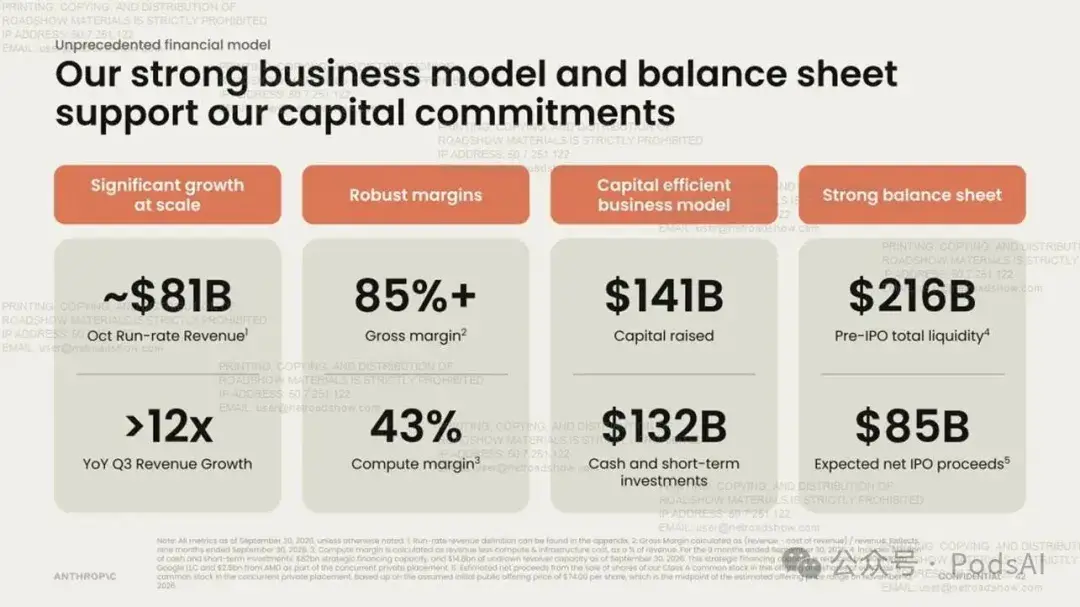
Anthropic has raised $141B in total, holds $132B in cash and short-term investments, has $216B in pre-IPO total liquidity, and expects about $85B in net IPO proceeds. Most of that money backs long-term compute commitments that run through 2045.
Our take
From an AI security perspective, three things stand out.
Security is part of the business case. Enterprises buying AI care most about permissions, auditing and human oversight. Anthropic pitched those as selling points, which shows security capability now drives revenue directly.
Finding bugs now outpaces fixing them. 271 bugs in one release and 129,000 verified vulnerabilities show AI finds flaws far faster than humans can patch them. Defenders need to automate patching and verification too, or the backlog grows with every discovery.
Models are reshaping their own R&D. With 90% of code written by Claude and a new chip platform ported in three days, models increasingly shape their own development. How to set permission boundaries, audits and oversight for systems like this will be one of the central AI security questions of the next few years.
The full version follows the roadshow's own three themes: how the co-founders make the case for Anthropic's advantages, why executives at Bristol Myers Squibb, Accenture and AIG say they chose Claude, how the CFO builds up to a 35% long-term margin, and the reasoning behind every key slide.
Based on Anthropic's November 2026 roadshow video and slides, as published by PodsAI. Slide images carry the original publisher's watermark. Figures follow the roadshow remarks and slides and have not been checked line by line against the prospectus. This is not investment advice.